
The word “holistic” gets thrown around a lot in the pet and wellness world—on food, supplements, and all kinds of products and services. I’ve used it too (and maybe you have as well). But these days, it feels like just another trendy buzzword—overused, commercialised, and often missing the point. On the flip side, there’s a push for everything to be strictly science- or evidence-based, which can lead to holistic approaches being dismissed as unscientific or not credible—even when they have value.
So I’ve been asking myself: What does holistic truly mean? Can holistic and science- or evidence-based approaches work together—rather than compete with each other?
What Does Holistic Truly Mean?
According to Oxford Languages, holistic means:
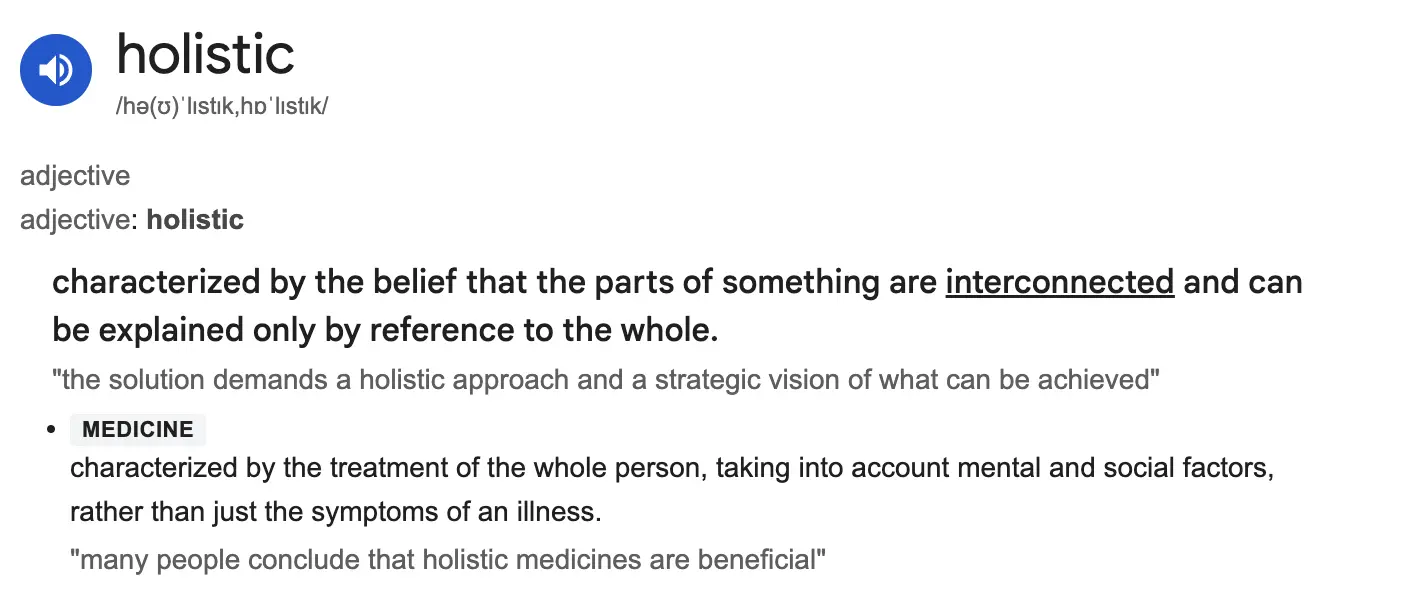
Holistic is a whole approach—one that sees the individual, whether human or dog, as an interconnected system of body, mind, and spirit. True holistic care recognises that every part of our lives, and our dogs’ lives, affects the whole—diet, environment, movement, rest, emotional wellbeing, relationships, and even the unseen (but deeply felt) connection to love, purpose, and life itself.
It’s not just about feeding your dog fresh food or switching to all-natural products. It goes beyond using a herbal supplement or topping their bowl with kale and blueberries. You can add all the so-called superfoods, sprinkle in turmeric, serve raw goat milk, or use organic flea spray—but if your dog is chronically stressed, not getting enough rest, barely moves their body, or lives in a chaotic environment, that’s not holistic care.
To me, holistic means living in a state of balance and harmony. Life is always shifting—and so are we, and so are our dogs. Holistic living means being aware of those shifts and gently adjusting—physically, emotionally, energetically—to stay in tune and maintain balance. Nothing in the body or in life exists in isolation. Everything is connected. True holistic living looks at the bigger picture.
Can Holistic and Science- or Evidence-Based Approaches Co-Exist?
Yes—and they should.
Holistic and science-based (or evidence-based) approaches are often seen as opposites, but they don’t have to be. They simply come from different perspectives—and when used together thoughtfully, they can offer a more complete and compassionate way of caring for ourselves and our dogs.
A holistic lens helps us understand the context—the lifestyle, root causes, and energetic imbalances. It looks at the whole being, with the goal of supporting balance, harmony, and long-term wellness—not just treating symptoms. A science- or evidence-based approach helps us make informed, proven decisions when precision, urgency, and reliability matter. It offers tools grounded in research and clinical data, often essential in acute or critical situations.
Together, they support both prevention and intervention. One nurtures long-term wellbeing, the other can offer effective action when the body needs help. It’s not either/or—it’s both/and, depending on what your dog needs in the moment. The key is discernment—the ability to combine intuition, experience, and science to give our dogs the best of both worlds.
It’s Not the Same World Anymore—For Us or Our Dogs
We live in a very different world from our ancestors—and so do our dogs. While their DNA may still resemble their wild or working roots, their day-to-day lives have changed drastically. They live indoors with us, breathe the same polluted air, eat from the same food system, and absorb the same overstimulation, stress, and noise that we do. That’s why we often see the same health issues in ourselves and our dogs.
We’re constantly exposed to environmental toxins, synthetic chemicals, ultra-processed foods, chronic stress, disrupted sleep, artificial light, and digital overload. Even our soil—the very foundation of our food system—isn’t what it used to be. It’s often depleted, over-farmed, and lacking the rich nutrients and microbial diversity it once had. So while we might reach for natural remedies or whole foods, we have to ask—how natural is our “natural” now? And the same goes for our dogs.
Yes, I still wholeheartedly believe that whole foods—real, fresh, minimally processed foods—are the best foundation for health. For us and our dogs. And that’s not just a personal belief—it’s backed by science. I also believe in the healing power of herbs—many herbs have well-documented, evidence-based benefits. And I’ve seen how other holistic healing modalities—like acupuncture, massage, Traditional Chinese Medicine (or TCVM in animals), and even Reiki—can be incredibly powerful. They do work (speaking from my own experience), but they often require time, consistency, and the right environment to be truly effective. We can’t expect them to work like magic or give instant results.
At the same time, there’s no shame in needing fast-acting support—especially when time is critical. Sometimes a pharmaceutical or clinical intervention is exactly what’s needed. The goal isn’t to reject modern medicine or rely blindly on natural alternatives—it’s to find balance—to know when immediate help is necessary, and when we can lean on the slower, more nourishing path of natural support and prevention.
Holistic living doesn’t necessarily mean doing everything “all natural” all the time. It means being in tune—with our bodies, our dogs’ bodies, and the reality of the world we live in. It means being honest about today’s modern challenges, and mindful about how we choose to respond. We’re not living in the same world our ancestors did. But we can draw from both ancient wisdom and modern science to navigate the world we’re in—consciously, compassionately, and with care.
There’s No Magic Pill
If there were truly one cure, one magic supplement, or one perfect formula for health—none of us would get sick. We’d all be thriving, disease-free, ageless, and our dogs would live forever. But that’s not how life works.
Health isn’t linear, and neither is healing. There’s no one-size-fits-all answer because every body—human or dog—is different. Genetics, environment, stress, diet, movement, relationships, energy… it all matters. The body is an interconnected system, not a machine that can be fixed with one tool or one pill. And yet, we’re obsessed with finding that one thing—the “best” supplement, the “cleanest” diet, the protocol that promises a longer life.
Longevity has become the goal—measured in numbers of years and test results. But let’s not forget about the quality of life! You can definitely take all the science-backed supplements, eat by the book, and track every biometric like Bryan Johnson—or you and your dog can live more like the people in the Blue Zones—places like Okinawa, Sardinia, and Ikaria. These communities live long, healthy lives not because they’re chasing longevity, but because they live with intention, rhythm, simplicity, and joy. They eat whole foods, move naturally, nurture deep relationships, have a strong sense of purpose, and experience low chronic stress. They aren’t biohacking their way to 100—they’re simply living. Fully and presently.
Holistic living isn’t about perfection or chasing immortality. It’s about finding balance—body, mind, and spirit—and living meaningfully, with intention. A long life? That’s just an added bonus.
Much love,
Riesa & Bowie
Read “How I Approach My Dog’s Health” post
including Q & A’s about diet and nutrition, and holistic vs. conventional care