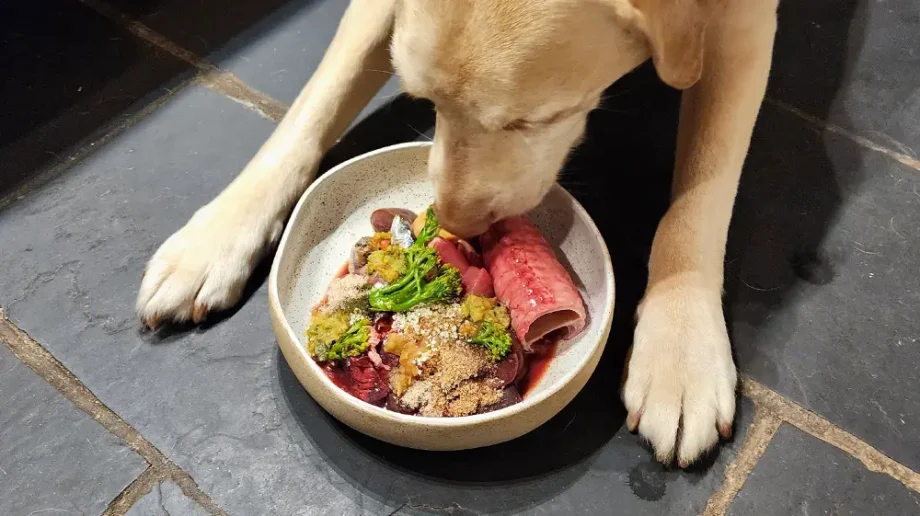
One of the key reasons dog parents avoid feeding fresh food is the risk of bacterial contamination from raw food. It is a valid concern, thus adequate fresh food safety and handling should be implemented to prevent cross-contamination.
Here are some simple instructions you can follow to keep yourself, your pet and your family safe and healthy.
- Separate all raw pet food from human food.
- Wash produce only and do not wash raw meat.
Bacteria in raw meat and poultry juices can spread to other foods, utensils and surfaces. - Refrigerate raw pet food and freeze to preserve food for longer.
Food poisoning bacteria grow and multiply fastest in the temperature danger zone between 5°C and 60°C. Your fridge temperature should be set at 5°C or below and your freezer temperature should be below –15°C. Avoid crowding stored products in the refrigerator and ensure good air circulation around each item. - Thaw raw pet food in the refrigerator.
This prevents the food from passing over the temperature danger zone (5°–60°C) where harmful bacteria grow and multiply the fastest. Keep raw food frozen until ready to use. Defrost 12–24 hours before feeding. You can defrost and refreeze raw food (if needed for portioning) provided that you do it in the fridge running at 5°C or below. It is best not to let it completely thaw before portioning. Always practise food safety and handling when dealing with raw food. - Clean and sanitise your prep space, tools and area where your dog eats to prevent cross-contamination.
You can disinfect the prep space and wash cutting boards, feeding bowls, knives and other utensils with hot, soapy water. If your dog does not eat all of their raw food, pick up and store the leftovers in the fridge to feed at the next meal. Do not leave raw food unattended and discard if spoiled. - Practise clean personal hygiene.
It is as simple as washing your hands with soap and water right after handling any raw pet food or waste. Do not let your dog lick around your mouth and face after eating. Make sure you dispose of your dog’s faeces and keep the eating and living areas clean.
Save the infographics below for future reference.
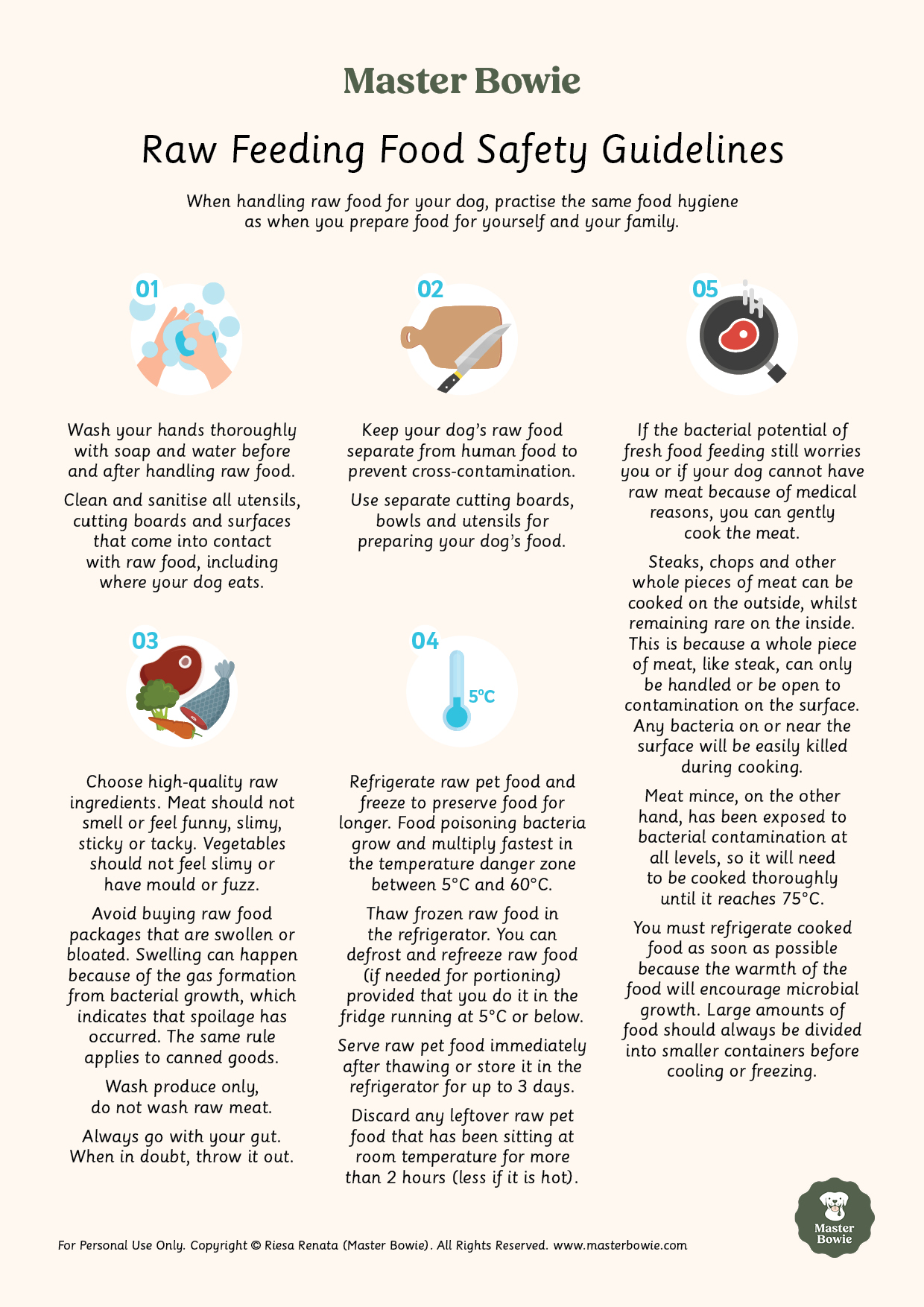

If the bacterial potential of fresh food feeding still worries you or if your dog cannot have raw meat because of medical reasons, you can gently cook the meat.
Steaks, chops and other whole pieces of meat can be cooked to preference – like when you order steak in a restaurant. They can be cooked on the outside, whilst remaining rare on the inside. This is because a whole piece of meat, like steak, can only be handled or be open to contamination on the surface. Any bacteria on or near the surface will be easily killed during cooking. Meat mince, on the other hand, has been exposed to bacterial contamination at all levels, so it will need to be cooked thoroughly until it reaches 75°C.
Cooked food should be stored properly to prevent bacterial contamination. You must refrigerate it as soon as possible because the warmth of the food will encourage microbial growth. Large amounts of food should always be divided into smaller containers before cooling because it can take many hours for the centre of a large container to cool to a temperature that will stop the growth of food poisoning bacteria. If you do not expect to eat the food within 3–4 days, it is best frozen immediately.
In closing, when handling raw food for your dog, apply the same food hygiene practices you use for your own meals to ensure the safety and well-being of your dog, yourself and your family.
Source: CSIRO, Centers for Disease Control and Prevention (CDC) and Food Safety Information Council